
Canada’s GlobalEye Choice Strengthens NORAD and Canadian Sovereignty
Canada’s proposed GlobalEye fleet would strengthen Arctic surveillance and NORAD while supporting Canadian aerospace. Capabilities deserve a fair comparison with Boeing’s Wedgetail—and a clear separation from the F-35/Gripen debate. Choosing it is Canada’s sovereign decision, serving shared defence.
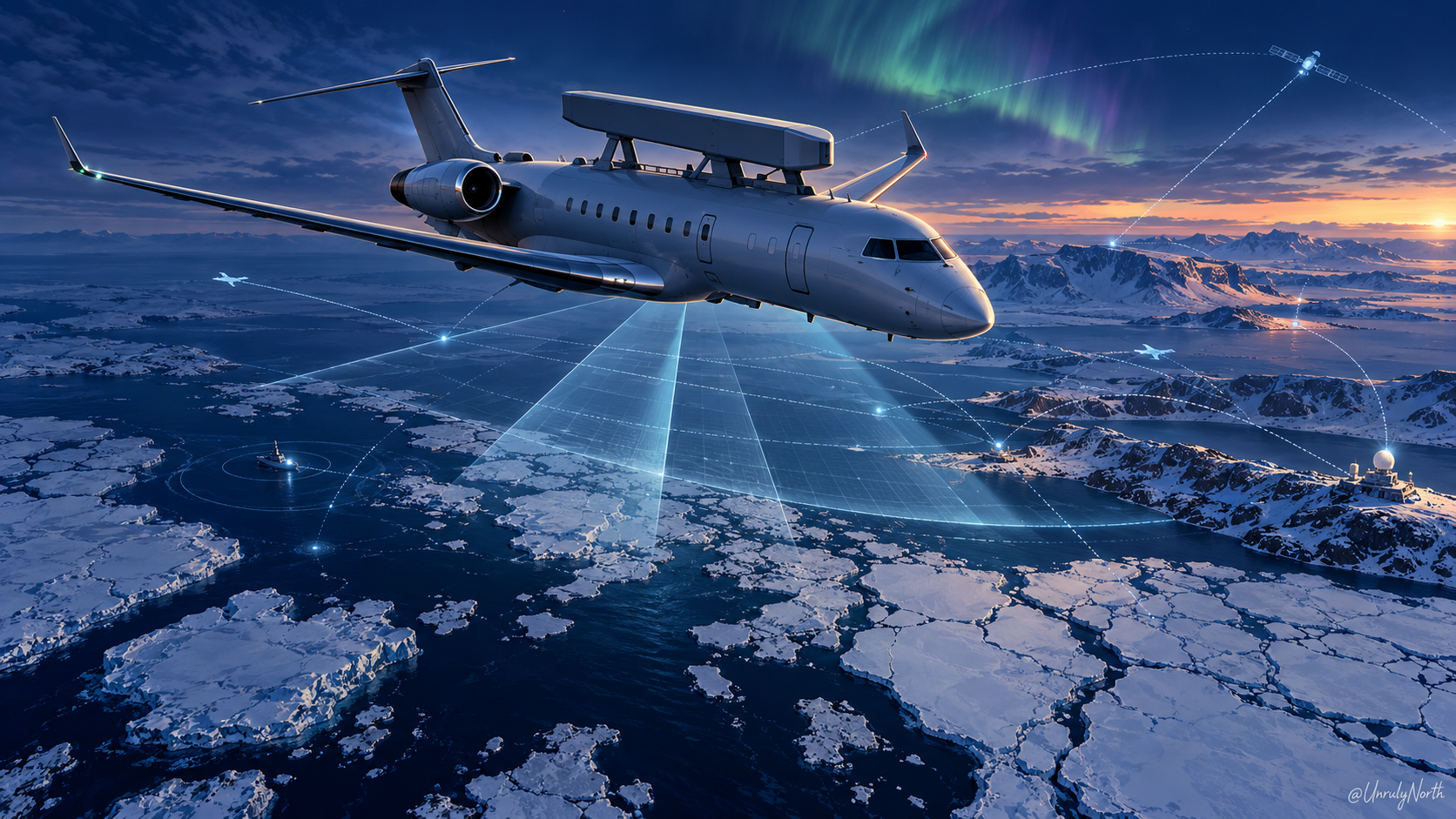
Canada has a compelling reason to pursue GlobalEye: it needs a better view of its own territory and the approaches to North America. An airborne surveillance and command system that can watch for aircraft, missiles, ships, and other activity across vast distances would strengthen Canadian sovereignty while improving the information available to NORAD. That capability also brings together Swedish defense technology and Canadian aerospace manufacturing. Washington should welcome the additional protection and respect Canada’s authority to choose the equipment that provides it.
Ottawa is negotiating for six GlobalEye aircraft, built around Bombardier’s Global 6500 and equipped with Saab’s surveillance and command systems. The September 25 agreement establishes the basis for detailed negotiations; it is nonbinding, and a purchase contract remains to be completed. The government’s stated objectives are clear: strengthen continental defense, modernize Canada’s contribution to NORAD, and improve operations in the Arctic and other remote regions.
One distinction must be established immediately: the GlobalEye acquisition is entirely separate from the F-35 versus Gripen fighter debate. GlobalEye is an airborne early warning and control aircraft. F-35 and Gripen are fighters. They perform different tasks and belong to separate procurement decisions. A surveillance aircraft helps detect threats and coordinate the forces responding to them; it does not replace those fighters. Saab’s involvement in both GlobalEye and Gripen does not make them a package, and choosing GlobalEye does not settle Canada’s fighter choice. The comparable aircraft in this discussion is Boeing’s E-7 Wedgetail.
The Canadian aircraft underneath GlobalEye’s radar is an important part of its appeal. It cannot, by itself, explain the international interest in the system. Sweden has ordered GlobalEye, France has signed a contract, the United Arab Emirates already operates it, and NATO has selected it for negotiations on a replacement for part of its aging airborne warning fleet. Canada would join a growing group of customers pursuing a capable surveillance system with applications well beyond any one country’s industrial policy.
A Canadian requirement shaped by geography
Canada’s northern defense problem begins with distance. Monitoring enormous stretches of territory, coastline, and surrounding airspace requires several complementary systems. Ground radars, satellites, ships, patrol aircraft, and fighters each contribute something different. Canada’s defense department describes airborne early warning and control as a capability the country currently lacks in its own dedicated fleet, leaving it dependent on a combination of existing sensors and allied aircraft. GlobalEye would help fill that gap.
An airborne warning aircraft provides more than a radar picture. It can track activity, combine information from different sensors, help identify potential threats, and coordinate the response of other aircraft and forces. Raising the sensors above the ground also extends their view of low-flying objects that terrain and the curvature of the Earth can conceal from ground installations. Saab’s system combines its Erieye Extended Range radar with additional sensors and an onboard command system to monitor activity across air, sea, and land.
That combination fits Canada’s geography. An aircraft approaching northern airspace, a vessel moving through a maritime approach, and activity near a coastal installation can belong to the same developing situation. A shared picture helps commanders understand those connections. GlobalEye would contribute information to the aircraft, ships, and ground forces responsible for responding; it would not independently secure every area its sensors observe.
The distinction also matters when discussing NORAD. The binational command’s responsibilities include aerospace warning, aerospace control, and maritime warning. Its maritime mission involves building a shared understanding of activity in Canadian and American waters and approaches. GlobalEye’s broader surveillance capabilities could therefore support NORAD while also serving Canadian military tasks beyond the command’s specific responsibilities.
Canada’s emphasis on the Arctic does not make GlobalEye an exclusively Arctic aircraft. Its first operational customer was the UAE, and the same basic system can support missions in very different climates. For Canada, northern surveillance and continental defense provide the central justification. The ability to deploy abroad adds flexibility, but any overseas commitment would need to account for the demands placed on a relatively small national fleet.
Wedgetail deserves a serious comparison
Boeing’s E-7 Wedgetail is a credible alternative with substantial strengths. Based on the 737, it offers ten mission consoles, an established aircraft support network, and proven aerial refueling. Boeing advertises missions lasting more than ten hours before refueling extends them further. Australia has demonstrated that endurance in practice, reporting a 17-hour Wedgetail mission supported by tankers. Those are meaningful capabilities for an aircraft expected to maintain surveillance and direct other forces over long periods.
GlobalEye makes its case through a different combination of capabilities. Saab advertises approximately 12 hours of operational endurance from its smaller Bombardier platform, alongside simultaneous surveillance across air, sea, and land. That advertised endurance is relevant to Canada’s long distances, although the available flight time must accommodate getting to a patrol area and returning home. It cannot be read as twelve hours continuously watching a distant part of the Arctic.
Wedgetail’s established aerial refueling capability remains an advantage. Canada has not publicly confirmed that its proposed GlobalEye configuration would include it. Whether that difference becomes decisive depends on the missions Canada expects to fly: their distance from suitable bases, the duration required on station, the availability of relief aircraft, and the availability of tankers. A proper comparison must examine that whole operating plan.
The same discipline should apply to claims about crew capacity and information processing. GlobalEye has onboard operators and processes information aboard the aircraft. Saab also describes options for streaming data to ground stations and accommodating up to ten operational work positions in a joint command configuration. Wedgetail likewise exchanges information with ground, maritime, and airborne forces. Both are networked command systems; their usefulness depends on the configuration purchased and the people trained to operate it.
Ground teams can bring additional specialists and other intelligence sources into the picture, while onboard operators retain a critical role when communications are restricted or disrupted. For Canadian operations, resilient northern communications will be part of the capability. Telesat’s contracted Arctic military communications service is relevant to that wider requirement, although a specific GlobalEye–Lightspeed integration has not been publicly confirmed. Purchasing the aircraft and connecting it effectively are related pieces of work that both need to succeed.
None of this requires pretending that GlobalEye defeats Wedgetail in every category. Public information does not provide a complete, independently verified comparison under identical conditions, and Canada has not published a detailed evaluation establishing its preferred platform’s advantage in every mission. The defensible case is that GlobalEye offers a substantial military capability suited to Canada’s stated needs, with industrial benefits that strengthen the overall proposition.
Canada is part of a wider allied investment
France’s purchase provides particularly useful evidence that GlobalEye’s appeal extends beyond its Canadian airframe. Its December 2025 contract covers two aircraft, ground equipment, training, and support, with deliveries scheduled between 2029 and 2032. Sweden’s orders provide another national commitment. These customers have their own defense requirements and will have to sustain and develop the system over many years.
NATO’s selection adds further weight, while requiring careful language about its status. Saab’s July announcement concerned formal negotiations for up to ten aircraft and explicitly stated that it had not yet received an order. The participating coalition includes Canada, Denmark, Norway, and Sweden, among other allies. If completed, that purchase would create a substantial shared interest in training, maintenance, upgrades, and the system’s continued development.
For Canadian aerospace, the opportunity extends beyond supplying the aircraft. Ottawa wants Canadian participation in installing and integrating mission equipment, maintaining the fleet, training personnel, research, and future exports. These benefits still have to be secured through the negotiations, but they offer a route toward retaining more technical expertise and long-term defense work in Canada.
Common equipment can also create opportunities for cooperation with European partners. Those benefits will depend on compatible configurations, agreements, and operating procedures. Working with American forces remains equally essential: NATO’s own digital strategy emphasizes shared standards, secure information exchange, and resilient networks across different national systems. Interoperability is something allies build and verify together.
The United States has a direct interest in Canada detecting threats earlier, understanding its northern approaches more clearly, and contributing more capable forces to continental defense. Canada has a corresponding responsibility to negotiate a sound contract, provide the supporting infrastructure, and turn a proposed purchase into reliable operational coverage.
Washington should assess that contribution on its military value and respect the sovereign decision behind it. Boeing’s capabilities deserve recognition. Canadian requirements deserve equal respect. A modern surveillance fleet that strengthens NORAD while expanding Canadian aerospace expertise is a legitimate and constructive exercise of Canadian sovereignty.